Why Higher GSM Doesn’t Always Mean Stronger Paper Cups
When customers choose paper cup raw materials, one of the most common questions is:
“Is higher GSM always better?”
Many paper cup manufacturers believe that higher GSM automatically means stronger paper cups. For example, they may think that 190gsm paper must be stronger than 170gsm paper.
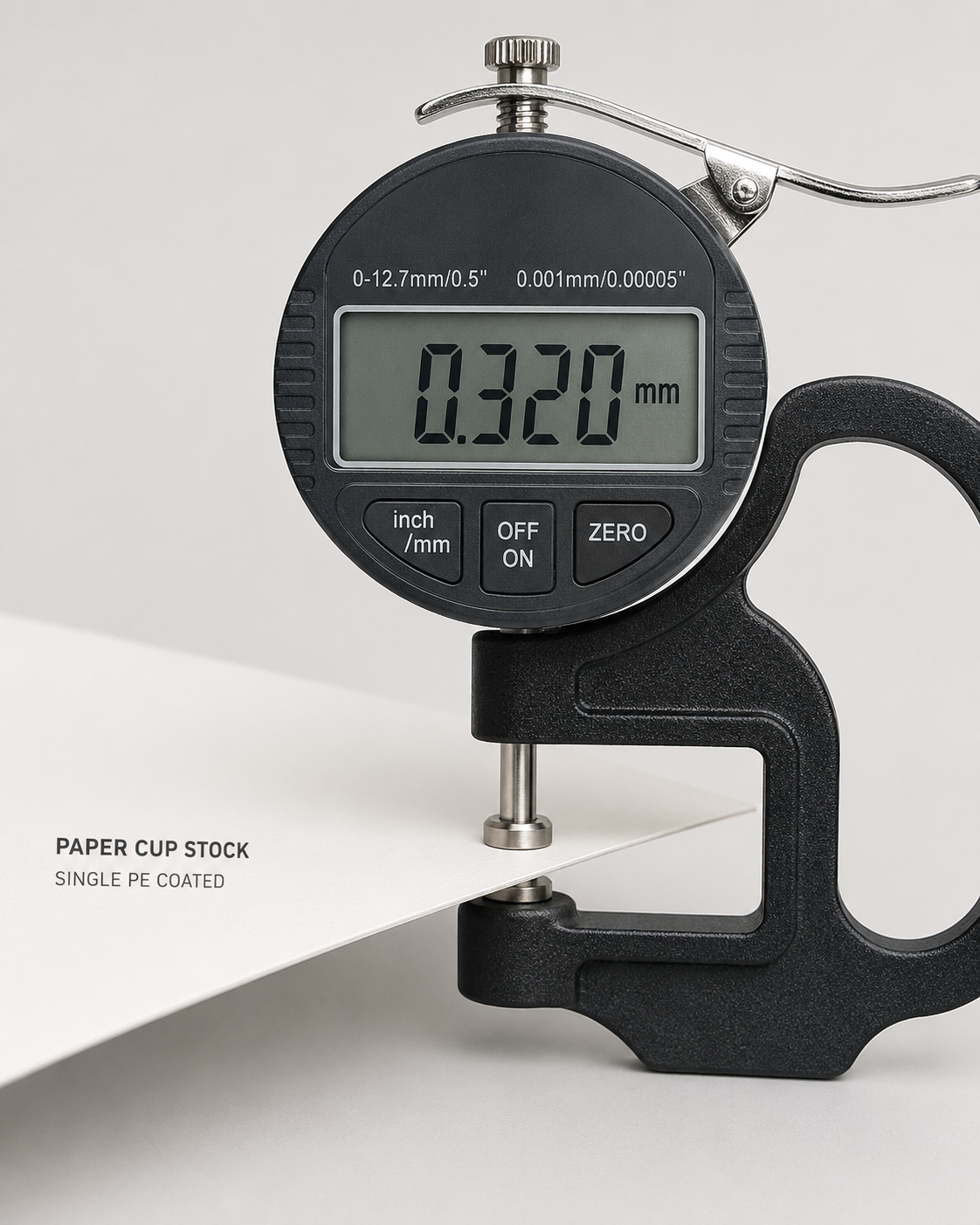
But in real paper cup production, this is not always true. GSM and thickness are two different things. GSM tells you the weight of the paper, while thickness tells you how thick or bulky the paper is. For paper cups, customers do not only feel the GSM. They feel the cup stiffness, cup hardness, and hand feel.
That is why two papers with the same GSM can perform differently, and in some cases, a lower GSM high-bulk paper may feel stronger than an ordinary higher GSM paper.
In this article, we will explain the difference between GSM and thickness, why both are important, and how to choose the right paper cup paper for better cup quality.
What Is High Bulk Paper?
High bulk paper means the paper has better thickness under the same GSM.
In simple words: Same GSM, higher thickness.
For paper cup production, high bulk paper can help improve cup stiffness and hand feel without necessarily increasing the paper weight too much.
For example, a customer may compare two papers:
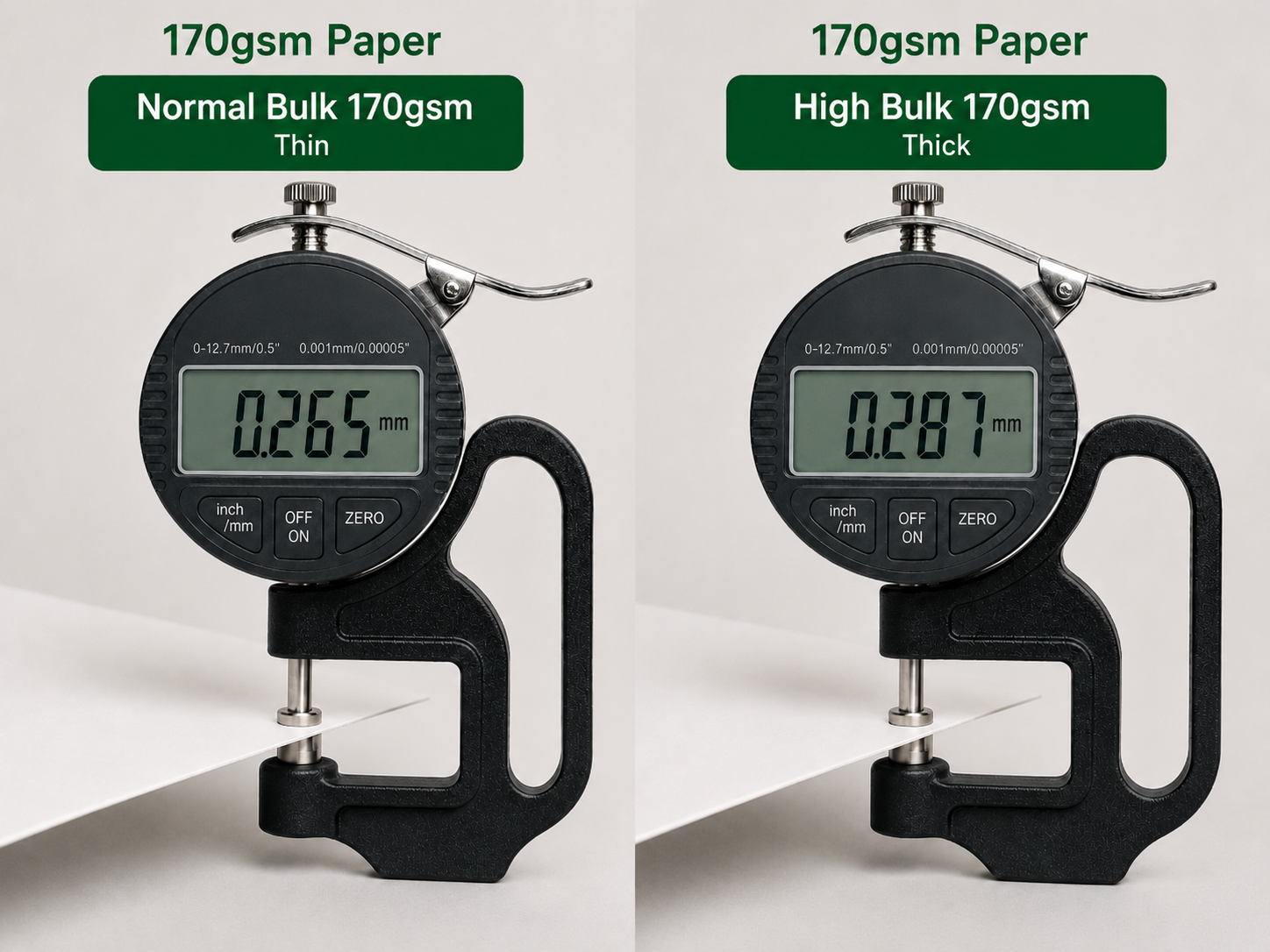
- Normal bulk 170gsm paper: thinner and softer
- High bulk 170gsm paper: thicker and stiffer
Both papers are 170gsm, but the finished cups may feel different. This is one reason why some 170gsm high-bulk paper can feel stronger than ordinary 190gsm paper in certain applications. Of course, this does not mean lower GSM is always better. The right choice depends on cup size, cup design, forming machine, PE coating, and customer requirements.
Why Thickness Matters for Paper Cups
For paper cups, thickness is not just a number on a test report. It affects real performance during production and use.
1. Cup Stiffness
Stiffness is very important for paper cups. A cup with poor stiffness may feel soft, weak, or cheap.
When customers hold a paper cup, they can immediately feel whether the cup is firm enough.
Higher thickness usually helps improve stiffness, especially for single-wall cups.
2. Cup Hardness and Hand Feel
End users do not know the GSM of the cup paper. They only feel the cup.
If the cup feels too soft, they may think the quality is poor, even if the GSM looks high on paper.
This is why hand feel matters.
A thicker and stiffer cupstock paper can make the finished paper cup feel more solid and comfortable.
3. Forming Performance
Paper cup factories also care about forming performance.
Good cupstock paper should run smoothly on paper cup machines. It should be easy to form, easy to seal, and stable during production.
If the paper is too soft or unstable, it may cause forming problems, waste, or machine adjustment issues.
So when choosing paper cup paper, buyers should check not only GSM, but also thickness, stiffness, PE coating, and actual forming performance.
4. Brand Image
For coffee cups, tea cups, ice cream cups, soup bowls, and takeaway food containers, the final cup quality affects the brand image.
A stronger cup gives customers a better feeling.
For branded paper cups, better stiffness and better hand feel can also improve the overall product presentation.
That is why many buyers are willing to choose better quality cupstock paper, even if the price is slightly higher.
Why Higher GSM May Still Feel Soft
Sometimes customers choose a higher GSM paper because they want stronger cups. But after production, the finished cups still feel soft.
Why does this happen?
There are several possible reasons.
First, the paper may be dense but not thick enough. Higher GSM does not always mean higher bulk.
Second, the stiffness of the base paper may not be good enough. Different paper mills produce different stiffness levels, even for the same GSM.
Third, the PE coating structure may affect forming and cup feeling.
Fourth, the cup size and cup design also matter. A larger cup usually needs stronger paper than a smaller cup.
Finally, the paper cup forming machine and production settings can also affect the finished cup quality.
So if you only compare GSM, you may still choose the wrong material.
What Should Buyers Check Besides GSM?
When choosing paper cup raw materials, buyers should check the full specification.
Important factors include:
GSM
Paper weight per square meter.
Thickness / Caliper
Paper thickness, usually measured in mm or microns.
Stiffness
The firmness of the paper, which affects cup hardness.
Bulk
The relationship between paper thickness and paper weight.
PE Coating
Single PE or double PE coating, and the PE coating weight.
Forming Performance
How well the paper runs on cup forming machines.
Printing Performance
Whether the surface is suitable for clear and stable printing.
Cup Application
Hot drinks, cold drinks, ice cream, soup bowls, or food containers.
A good cupstock paper should match the customer’s cup size, machine type, production speed, and market requirements.
GSM vs Thickness: A Simple Example
Let’s take 170gsm paper as an example. Both papers can be 170gsm, but their thickness may be different. One paper may be normal bulk and thinner. Another paper may be high bulk and thicker. When these two papers are made into cups, the high-bulk paper may give better stiffness and a stronger hand feel.
This is why we often tell customers: Do not only compare GSM. Compare GSM, thickness, stiffness, PE coating, and forming performance together.
This is a more professional way to choose paper cup paper.
How to Choose the Right Paper Cup Paper
There is no single GSM that is suitable for every paper cup.
Different products need different paper specifications.
For small coffee cups, the paper may not need to be too heavy.
For larger drink cups, stronger paper may be required.
For paper bowls, higher stiffness and better forming performance are important.
For ice cream cups or soup bowls, the coating and barrier performance are also important.
Before choosing the material, buyers should confirm:
Cup size
Cup design
Hot drink or cold drink application
Single-wall or double-wall cup
Paper cup machine model
Required stiffness
Printing design
PE coating requirement
Target market quality level
After these details are clear, the supplier can recommend a more suitable paper specification.
PE Coated Paper Rolls, Paper Cup Fans, and Cup Bottom Rolls
For paper cup production, the most common raw materials include:
PE Coated Paper Rolls
Used for printing, die-cutting, and paper cup body production.
Paper Cup Fans
Printed and die-cut cup blanks used for forming the side wall of paper cups.
Cup Bottom Rolls
Used for producing the bottom part of paper cups and bowls.
Each material should be selected according to the final cup application.
For example, paper cup fans need good printability, accurate die-cutting, stable PE coating, and smooth forming performance.
PE coated paper rolls need stable coating quality, suitable width, clean roll edges, and good machine performance.
Cup bottom rolls need good sealing performance and stable quality.
When all these materials match well, paper cup factories can produce cups more efficiently and reduce production waste.
Final Thoughts
Higher GSM does not always mean stronger paper cups. GSM means paper weight. Thickness means paper caliper. Stiffness affects cup hardness and hand feel. For paper cup production, the best choice is not always the highest GSM. The right choice should depend on the full specification and actual performance.
When choosing cupstock paper, buyers should check:
- GSM
- Thickness
- Stiffness
- Bulk
- PE coating
- Printing performance
- Forming performance
This is how you choose the right paper and make better paper cups.